Standards and Regulations
The objective of CBAM is to counteract the phenomenon of carbon leakage, i.e. the relocation of industrial production to countries with less stringent environmental regulations, while at the same time preserving the competitiveness of European companies.
For the metallurgical sector and for the supply chain of industrial steel fittings, CBAM represents a structural change affecting imports, costs, supply chain management and supplier selection criteria.
What is the Carbon Border Adjustment Mechanism
CBAM is a carbon cost adjustment mechanism applied to products imported into the European Union. The principle underlying the system is to align the cost of the CO₂ emissions embedded in imported goods with the cost borne by European producers subject to the ETS (Emission Trading System).
Through CBAM, European importers are required to declare the greenhouse gas emissions generated during the production of goods purchased from non-EU countries. At a later stage, these emissions will have to be offset through the purchase of specific CBAM certificates, whose value will be linked to the price of CO₂ in the European market.
The role of steel in CBAM
Steel is among the sectors initially covered by CBAM, as it is characterised by energy-intensive production processes and a significant impact in terms of carbon dioxide emissions.
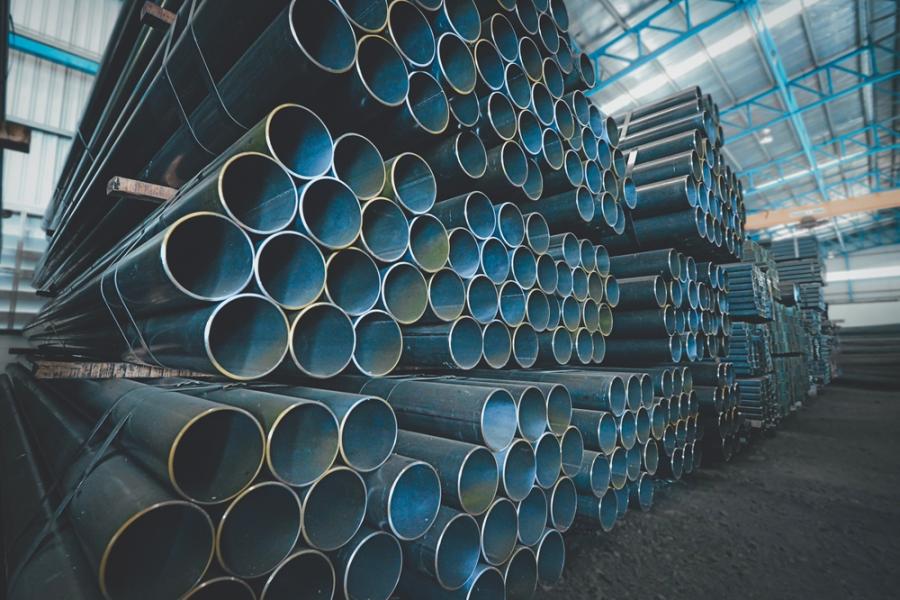
Industrial fittings made of carbon steel and stainless steel, as well as flanges, piping, and other piping components, are part of the value chain of steel products. Consequently, the introduction of CBAM directly impacts imports of these products and the assessment of overall procurement costs.
This results in a number of concrete effects on the steel fittings supply chain. First and foremost, it increases the focus on product traceability, requiring detailed information on the raw materials used, production processes and energy consumption during manufacturing.
From an operational perspective, companies importing industrial fittings from non-EU countries will have to actively cooperate with suppliers to obtain reliable data on embedded emissions. This aspect makes it increasingly strategicto select industrial partners capable of ensuring transparency, robust documentation quality and regulatory compliance.
From the transitional phase to the definitive phase of CBAM
A
As of 01/01/2026, CBAM has entered its definitive phase. From this date onwards, in addition to reporting obligations, it is also necessary to purchase CBAM certificates to cover the embedded emissions of imported products.
Access to the CBAM system also requires the issuance of a specific authorisation by the Ministry of the Environment and Energy Security (MASE), the competent authority in Italy.
Intertubi has recently obtained this authorisation, confirming its compliance with regulatory requirements and its ability to operate within the new European regulatory framework.
Addressing CBAM through a structured approach, based on regulatory knowledge, process control and supply chain transparency, enables companies to prepare effectively for a market increasingly oriented towards sustainability and industrial reliability.